
Italiano
Italian for kids: learn it the way families talk
By the Parler team · Updated · Read-aloud voices: Italy
The short answer
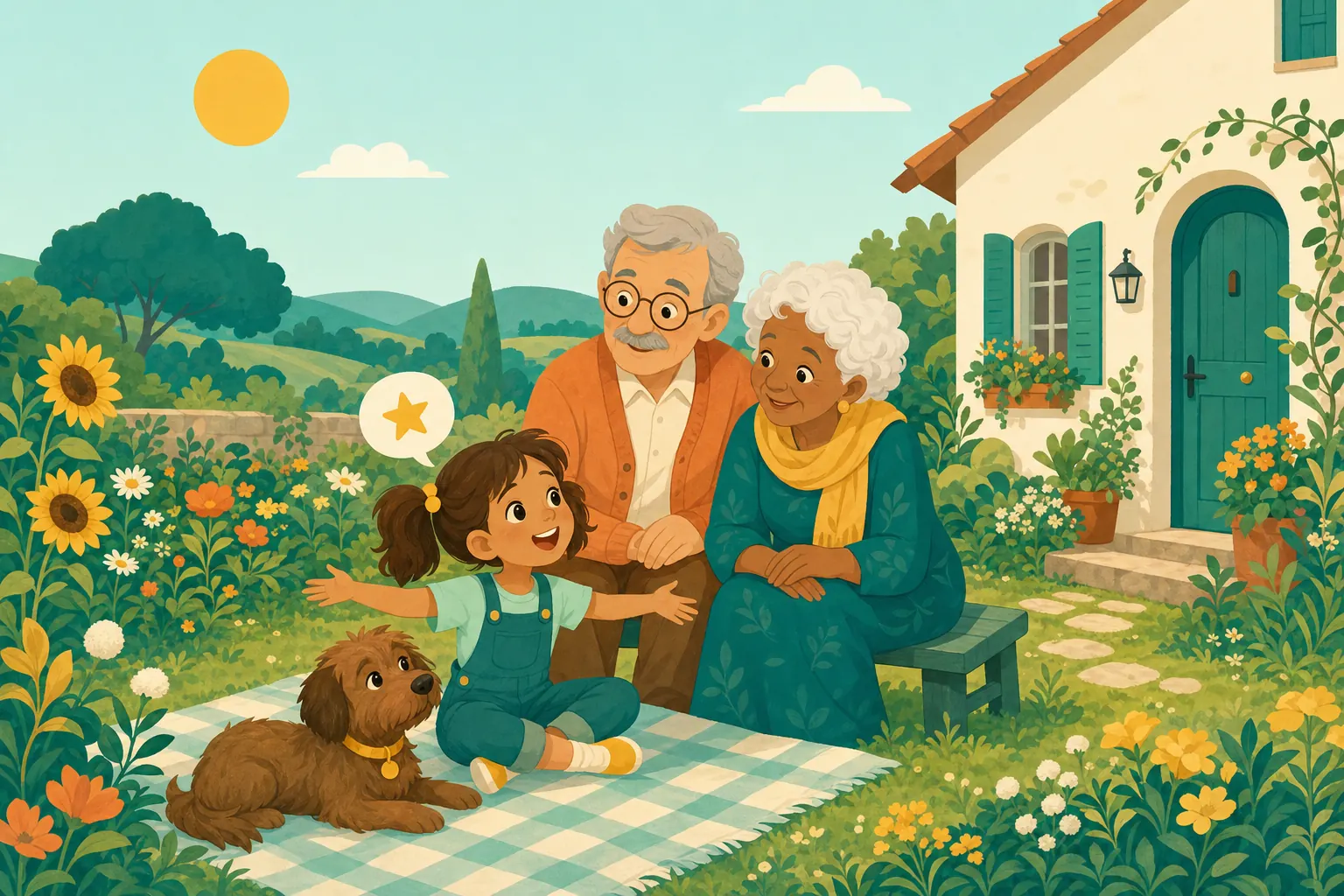
Italian comes alive at the kitchen table. Use it for the moments your family already shares: meals, bedtime, a call with Nonna. Name what's around you, repeat the same phrases every day, and read short stories about your child's day out loud. Parler turns your child's own story into an illustrated Italian book that reads aloud with each word lighting up.
Italian is spoken in Italy, San Marino, Vatican City and parts of Switzerland. Italian families also live all over the world, from the United States to Argentina and Australia, and many keep the language going at home.
Kids often learn Italian to talk with nonni and cousins, to keep a family language alive, or to get ready for a trip to Italy. The first words that matter are the warm, everyday ones: mamma, nonna, pasta, gioca.
Italian is a good first language for kids. It is spelled the way it sounds and many words are already familiar from food and music. The harder parts are the double consonants, the many forms of the, and verb endings that change with each person.
What’s different
What to know about Italian for a young learner
- Say every vowelItalian vowels are always pronounced, even at the end of a word. Cane is KAH-neh, not cane. Most words end in a vowel, which gives Italian its sing-song sound.
- Hold the double consonantsA double letter is held a little longer, and it can change the meaning. Nonno is grandpa, but nono means ninth. Clapping out words like gat-to and pal-la helps kids feel the pause.
- C and g change before e and iBefore e or i, c sounds like ch and g sounds like j, as in ciao and gelato. Add an h and they go hard again: che sounds like keh. Kids who know this can read most words on sight.
- Learn each noun with its articleNouns are masculine or feminine, often ending in -o or -a: il gatto, la casa. Italian has several forms of the (il, lo, la, l'), so learning the word with its article is the easiest path.
First words
Italian words for everyday life
Start with the words for their own day: home, family, school and play. They come up every day, so they stick.
| Italian | English | Say it |
|---|---|---|
| la casa | the house | lah KAH-zah |
| il gatto | the cat | eel GAHT-toh |
| il cane | the dog | eel KAH-neh |
| la cucina | the kitchen | lah koo-CHEE-nah |
| il letto | the bed | eel LET-toh |
| il tavolo | the table | eel TAH-voh-loh |
| la porta | the door | lah POR-tah |
| il giardino | the garden, the yard | eel jar-DEE-noh |
| Italian | English | Say it |
|---|---|---|
| la mamma | mom | lah MAHM-mah |
| il papà | dad | eel pah-PAH |
| il fratello | the brother | eel frah-TEL-loh |
| la sorella | the sister | lah soh-REL-lah |
| la nonna | grandma | lah NON-nah |
| il nonno | grandpa | eel NON-noh |
| il bambino | the little boy, the baby | eel bahm-BEE-noh |
| la famiglia | the family | lah fah-MEEL-yah |
| Italian | English | Say it |
|---|---|---|
| la scuola | the school | lah SKWOH-lah |
| il libro | the book | eel LEE-broh |
| la matita | the pencil | lah mah-TEE-tah |
| la maestra | the teacher (woman, elementary school) | lah mah-EHS-trah |
| l'amico | the friend (boy) | lah-MEE-koh |
| lo zaino | the backpack | loh DZY-noh |
| la ricreazione | recess | lah ree-kreh-ah-TSYOH-neh |
| il disegno | the drawing | eel dee-ZEN-yoh |
| Italian | English | Say it |
|---|---|---|
| felice | happy | feh-LEE-cheh |
| triste | sad | TREE-steh |
| stanco | tired (boy) | STAHN-koh |
| giocare | to play | joh-KAH-reh |
| la palla | the ball | lah PAHL-lah |
| il giocattolo | the toy | eel joh-KAHT-toh-loh |
| ridere | to laugh | REE-deh-reh |
| ho paura | I'm scared | oh pah-OO-rah |
Family phrases
Italian phrases to use at home today
| Italian | English | Say it |
|---|---|---|
| Buongiorno | Good morning | bwon-JOR-noh |
| Ti voglio bene | I love you (the warm family way) | tee VOHL-yoh BEH-neh |
| Posso avere…? | Can I have…? | POS-soh ah-VEH-reh |
| È ora di andare a letto | Time for bed | eh OH-rah dee ahn-DAH-reh ah LET-toh |
| Bravo / Brava | Well done (to a boy / to a girl) | BRAH-voh / BRAH-vah |
| Buonanotte | Good night | bwoh-nah-NOT-teh |
| Grazie | Thank you | GRAHT-tsyeh |
| Per favore | Please | pehr fah-VOH-reh |
| A tavola | Dinner's ready (come to the table) | ah TAH-voh-lah |
| Vuoi giocare? | Do you want to play? | vwoy joh-KAH-reh |
Oggi ho fatto una torta con la nonna.
Today I made a cake with Grandma.
Questions
Italian for kids: questions
Short answers. The help center has more on using Parler.
Visit helpWhat age should my child start Italian?
Any age is fine. Little ones copy the sounds easily, and older kids can read along quickly because Italian is spelled the way it sounds. Start when you can make Italian part of everyday family life.
Which Italian does Parler use?
Parler reads aloud with a voice from Italy, speaking standard Italian. That is the Italian taught in schools and understood everywhere Italian is spoken.
Is Parler free?
Yes, the First Page plan is free with 5 pictures a month for one learner. You can also try Storybook free for 14 days with 30 pictures and no card. Words, translations, voices and reading scores are always free.
Can my child learn Italian if we don't speak it at home?
Yes. Your child can hear Italian read aloud by an Italian voice and follow each word on the page, so you don't need to be fluent. A few shared phrases at meals and bedtime go a long way.
How long does it take a child to learn Italian?
It depends on how often your child hears and uses Italian. Short, regular practice usually works better than long sessions now and then, and everyday words come first.
Keep reading
- How do I keep a family language alive when my child is losing it?How to keep a heritage language alive when your child is losing it: daily routines, grandparents on video calls, family stories and real reasons to use it.
- How can our whole family learn a language together?How to learn a new language as a whole family: start with family words, label the house, use dinner phrases, hold a weekly language hour and let the kids teach.
- How can my kids learn some of the language before a trip abroad?A simple 4-week plan to help kids learn some of the language before a trip abroad: a phrase a day, role-play at home and short books about the trip itself.